1984
"Donec cognoscant, quod non repugnent, et nisi postquam recesserunt, non possint conscii esse."

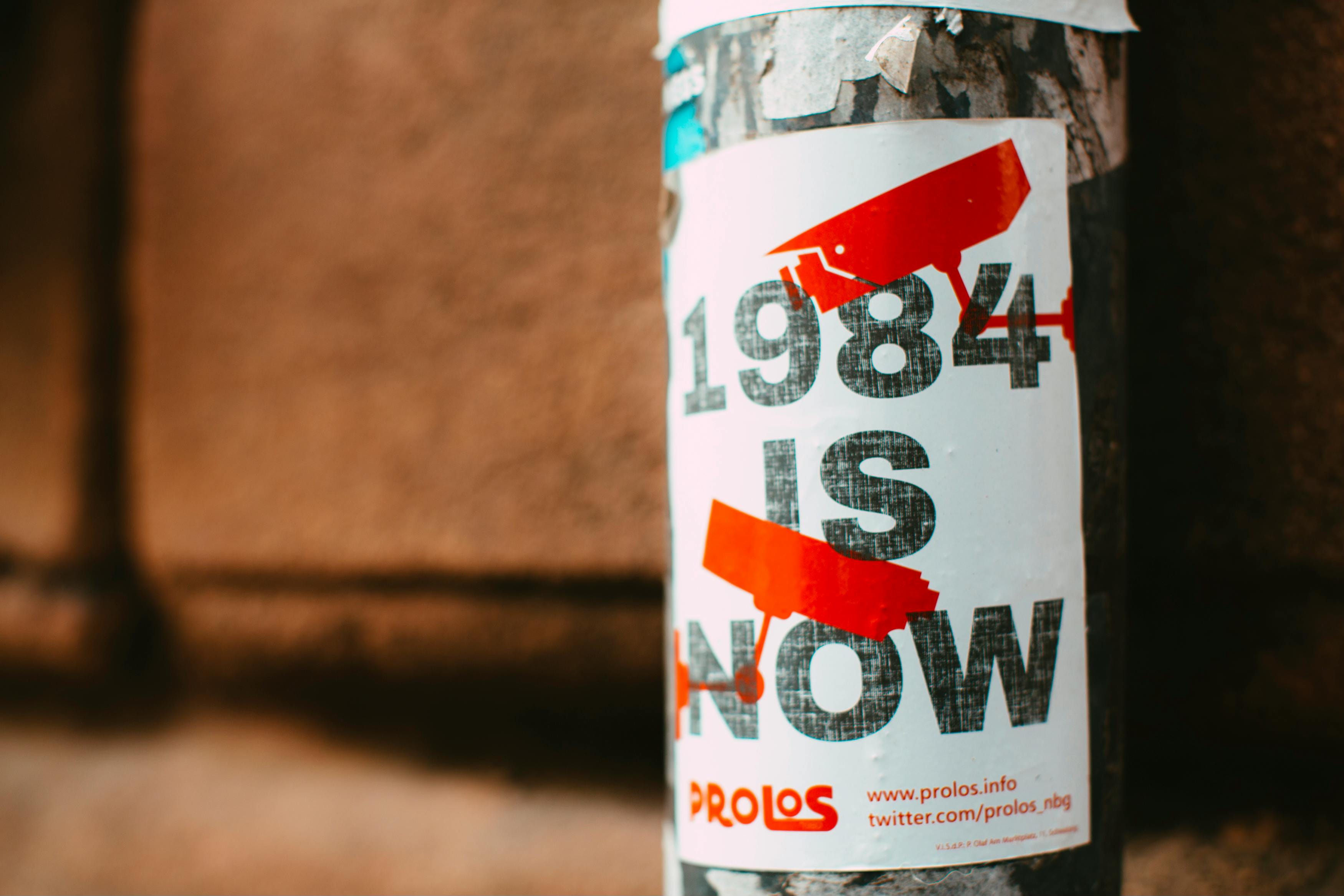
"Until they become conscious they will never rebel, and until after they have rebelled they cannot become conscious."
Since I have finished Praxis, this newsletter is going to shift into an essay style where I’ll explore ideas, books, and other things that interest me. Occasionally I’ll include an update or two, but this week I’ll be going over George Orwell’s 1984. Thanks for sticking with me throughout the program!
1984, is the dystopian novel by George Orwell, which depicts a nation controlled by English Socialists who identify themselves as The Party. Under the cultish leadership of the elusive Party face called Big Brother, the people are kept under constant surveillance. Everyone must live by the actions, behaviors, and even language of the Party.
The Party controls the people, the facts, and even history itself, which they frequently rewrite to prove their infallibility.
“History has stopped. Nothing exists except an endless present in which the Party is always right.”
We watch the protagonist, Winston Smith, as he tries to undermine the Party, and what happens to him when he does. It starts well before he meets Julia and begins his affair with her. It starts before he buys the journal and writes the condemning words “Down with Big Brother” again and again. It starts with his thoughts. His search for truth.
But as hard as he searches, it always seems just out of his reach—a carrot on a stick. And in the end, he even loses the part of himself that wanted to search. The Party annihilated the truth in Winston, just like it did for so many others.
In our world, we are constantly bombarded by media from every direction. Try going one-day media-free, with no TV, social media, radio, books, or billboards (yes those count). You’ll find it nearly impossible.
And yet this is the world we are entrenched in just like Winston. There are some differences. We can turn the TV off, and we can do a media fast, however hard it would be, but can we ignore the propaganda that we take in?
Much like the world of 1984, there is a megaton of misinformation that cycles through news outlets and the public. That combined with a widespread deficit in critical thinking skills leads many to incorrect conclusions about the world that we live in. Unlike in 1984, there is no straw man that the people direct their hate towards. There is no one ideal being enforced upon the population at large. People don’t hate an imaginary straw man, they hate each other.
In 1984 there is a war going on that forces the people of Ociania to live through hardships and gives them an antagonist to despise. This war is happening somewhere far away from London, and the people never see it, yet they are bombed and terrified into believing it is true. In 2024 there is a culture war happening that forces individuals into the same panicked frenzy of fear and rage that the fictional characters experience. We are rage-baited into believing every headline without knowing if it is true.
1All this is done while our information is being meticulously collected by the websites we shop from, connect with our family, and find entertainment. We are all being surveilled, both by private companies and by our government. 2As Edward Snowden, a former employee of both the CIA and NSA, revealed, the United States government has been developing ways to track and collect our internet usage.
We even see the dystopian idea of telescreens in action in the People’s Republic of China, where cameras can identify individuals’ faces and survey them. China is an example of a socialist country that is slowly creeping its way towards the world 1984.
3“Socialism is a political and economic theory of social organization that advocates that the means of production, distribution, and exchange should be owned or regulated by the community as a whole.” The biggest problem with socialism is that it assumes that people are inherently good and that a majority will work for the good of the community. This ignores the many people who do not care for the universal good of the community and will take advantage of the systems in place. There are no true Socialist countries that have succeeded. In theory, socialism offers more equity and humanity, but in practice, this has not proved true.
While there are no true capitalist or socialist countries as true competition or perfect equity can only exist in theory, the theory of capitalism provides incentives for work, innovation, and economic growth. While capitalism can and has created inequality and exploitation, Socialism does this even more. Universal healthcare places deciding factors into the hands of the government, as seen in the case of 4Indi Gregory, a child whose care was defined in a courtroom and not by her parents, and resulted in the loss of her life when other options were available.
While this case may be an outlier in a long list of medical successes in a socialistic healthcare system, the fact that Gregory’s parents were not allowed to try other options, even when Italy had given her citizenship and agreed to pay for all of her medical treatment, shows the lack of humanity in the parties that made the decision.
Another example of the failure of totalitarian socialism is in China’s previous one-child policy, which resulted in deaths and an imbalance of the sexes. The people were told what to do by the government, and while there were many exceptions and workarounds to this policy, it was damaging to the country and individuals within the system.
While we have not quite reached the extremities of 1984, some countries seem to be rapidly approaching the point at which-
“In the eyes of the Party, there was no distinction between the thought and the deed.” 1984 is a cautionary tale. It advocates that we pay attention to where we are being directed and why; how we use our language; and stand up for the truth, even if we are the only ones.
Thanks for reading.
Oxford dictionary